


Case
Equal Protection Project supports free speech rights of public employees at U.S. Supreme Court
Case Particulars
Tribunal
U.S. Supreme Court
Date Filed
March 11, 2026
Docket No.
25-819
Case Status
Amicus brief filed supporting Petitioner
Case Overview
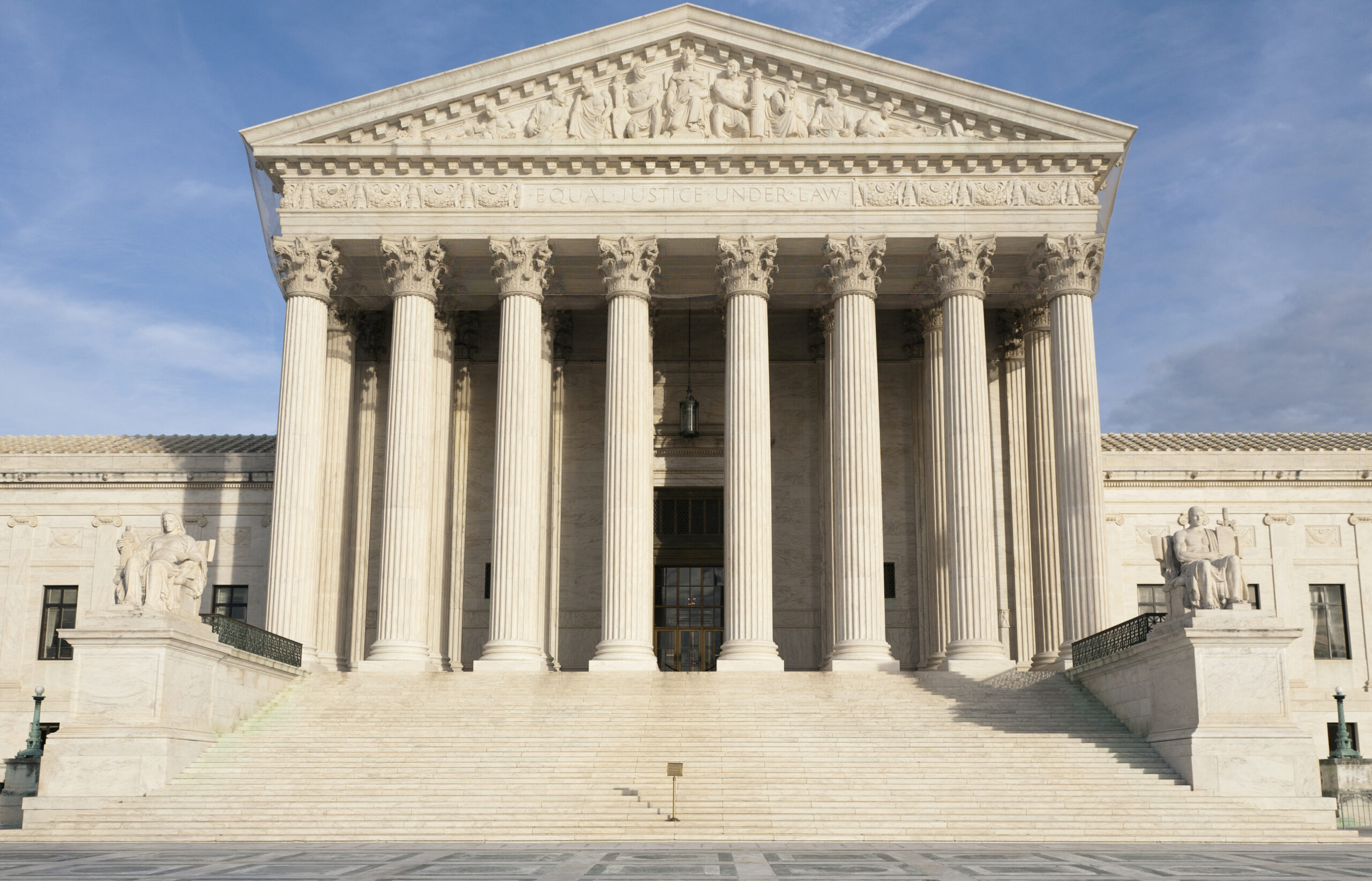
On March 11, 2026, the Equal Protection Project (EPP) filed an amicus curiae (“friend of the court”) brief at the United States Supreme Court in Hedgepeth v. Britton, et al.
This case centers on whether public employees, like school teachers, can constitutuionally be fired for speech they make while off the clock on a private social media account.
For 20 years, petitioner Jeanne Hedgepeth was a teacher at Palatine High School in Illinois.
While on summer vacation in Florida, she posted several comments on her private Facebook page criticizing political unrest following the death of George Floyd.
The school district fired Hedgepeth after administrators deemed her core protected speech “disrespectful, demeaning of other viewpoints, and racist.” In any other context, such blatant viewpoint discrimination by government officials would be a nonstarter. But because Hedgepeth is a public employee, the Seventh Circuit held that the First Amendment does not bar the government from firing her based on the views she expressed in off-the-job speech on topics unrelated to her work.
EPP made three arguments in addition to those made by Hedgepeth for why her termination was unconstitutional:
First, while the law demands a hard look at the facts for the purpose of placing speech into context, the courts below selectively devalued all facts tending to put the content of the speech into context. Not only did the the courts below ignore that Hedgepeth is an award winning teacher with a record of inclusiveness, but elevated her disciplinary record despite its irrelevance to her speech.
Second, the legal test used to justify her termination requires substantial interference in the discharge of duties and responsibilities inherent in the employee’s job, and this interference was entirely lacking here. In this case, the courts went straight to hyperbole. All of the school district, the district court, and the appeals court heard that there were people who disagreed with the content of Hedgepeth’s speech and breathlessly rushed to find that the school and district operations were thrown into “disarray.”
No one ever alleged that one child in the community lost a learning opportunity. In fact, the speech occurred over the summer and Hedgepeth was on vacation.
Third, it is a “bedrock principle” that speech may not be suppressed because some find it “offensive or disagreeable.” The facts relied upon by the courts in this case are viewpoint oriented and rely upon members of the community disagreeing with the content.
The school district received emails from people who disagreed. The school board held two public meetings to hear from members of the public who disagreed. Hedgepeth’s speech also received media coverage from outlets that disagreed.
There was no disruption in the provision of educational services, only people who disagreed. If the law allows this result, it must change to be consistent with First Amendment law.
The Court should protect public employees right to freedom of speech.